
Design for Manufacturing (DFM) for PCBs: Electronic Boards That Are Easier to Build
A smaller component is not always the better choice. DFM connects PCB layout, SMT assembly, component availability and series production.
Companies we work with






When components are in short supply, we can turn to independent distributors that Electra has carefully selected and qualified over time.
Component reliability is verified in two steps. First, we identify which of our distributors is best placed to meet the specific supply requirement. When the goods arrive, we run a functional test on sample boards covering at least 30% of the received batch.
Only after the quality and functional checks are passed are the components approved and released to the assembly line.
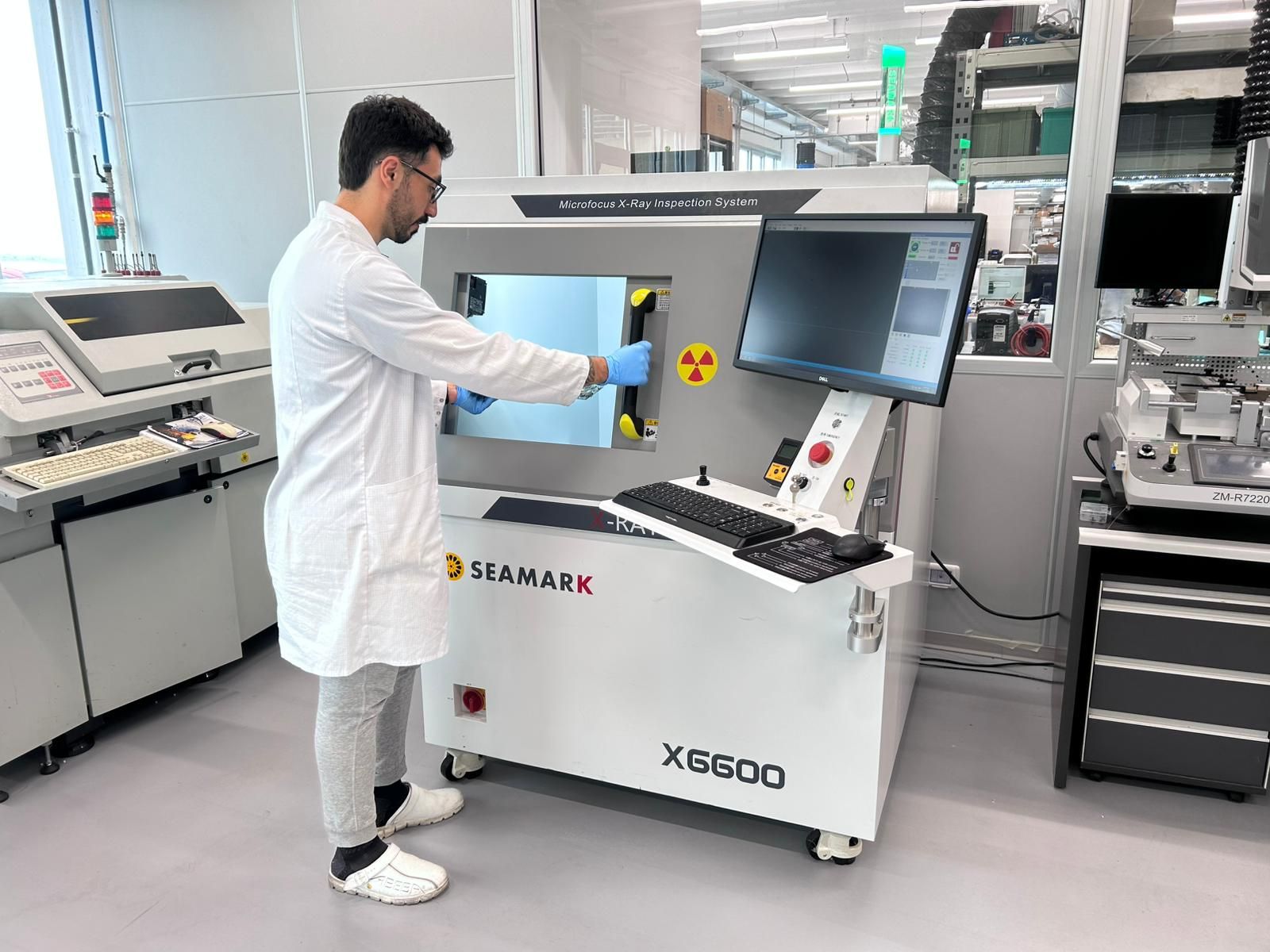
In electronics design and manufacturing, functional test systems are developed to verify that every assembled product works exactly as intended, reproducing real operating conditions as faithfully as possible.
During the test, the electronic board is connected to the same loads, components and devices found in the final product. This makes it possible to check its behaviour in the real operating context, detect any anomalies and guarantee reliable performance before it goes into service.
Electronic materials are stored and handled according to the MSL (Moisture Sensitivity Level) declared by the manufacturer of each component.
Moisture-sensitive components are kept in moisture barrier bags with desiccant and humidity indicator cards, or in dry cabinets with controlled environmental conditions. Once a package is opened, exposure time is monitored so that the floor life specified for that MSL is respected.
If the maximum exposure time is exceeded, or the humidity indicator shows non-compliant conditions, the material is dried (baked) according to the manufacturer's instructions and the applicable specifications before it is used in production.
Every component is also identified and handled on a FIFO basis, ensuring full traceability of the batch, exposure times and storage conditions.
Our internal procedure starts by acquiring the documentation supplied by the customer and matching the component part numbers to those already in Electra's warehouse. New part numbers are created for materials not yet registered, so that each one is managed uniquely and traceably.
We then draw up the GDT, a confidential internal document with a sequential number that gathers all the instructions and specifications needed to produce the electronic board or device.
The document is updated with each new version of the product, so changes and revisions remain traceable over time.
Written around the customer's documentation and requirements, the GDT is our internal operating reference for precise, consistent and controlled production.